How Can CSR Partnerships Help Children Access Quality Education in India?
Corporate Social Responsibility (CSR) partnerships can help improve children's access to quality education in India by supporting areas such as school infrastructure, foundational learning, teacher development, digital access, inclusive education, and initiatives that help children stay in school.
When CSR programmes are planned around the actual needs of children and communities, they can complement government efforts and help address specific gaps that affect learning.
Education is also recognised as an eligible CSR activity under Schedule VII of India's Companies Act, 2013, which includes the promotion of education, special education and employment-enhancing vocational skills.
Why Is Access to Quality Education Still a Challenge?
India has made significant progress in expanding access to education. However, being enrolled in school does not always mean that a child is learning at the expected level.
The Annual Status of Education Report (ASER) 2024 shows improvement in foundational learning in rural India, particularly in government schools. At the same time, learning gaps remain.
For example, in 2024, 44.8% of Standard V children in government schools could read a Standard II-level text. This was an improvement from 38.5% in 2022, but it also shows that many children continue to need additional learning support.
Quality education therefore involves more than school enrolment. Children also need:
- Appropriate teaching and learning support
- Safe and inclusive classrooms
- Qualified and supported teachers
- Basic infrastructure
- Learning materials
- Digital opportunities where appropriate
- Water, sanitation and hygiene facilities
- Support to continue their education without dropping out
How Can CSR Partnerships Support Quality Education?
CSR partnerships can contribute in several interconnected areas.
1. Improving Foundational Literacy and Numeracy
Reading, writing, and basic mathematics are the foundation for future learning.
However, children within the same classroom may have very different learning levels. ASER notes that understanding what children can currently do is important because teaching only according to the grade-level textbook may leave children who are behind struggling to catch up.
CSR-supported education initiatives can help by providing:
- Foundational literacy and numeracy programmes
- Remedial learning support
- Age-appropriate learning materials
- Reading programmes and libraries
- Learning assessments
- After-school learning opportunities
The objective should not simply be to distribute educational materials, but to determine whether children are actually improving their learning.
2. Strengthening School Infrastructure
The learning environment can directly affect whether children are able to attend and participate comfortably in school.
CSR initiatives can contribute toward improving facilities such as:
- Classrooms
- Libraries
- Science laboratories
- Computer laboratories
- Drinking water facilities
- Toilets
- Handwashing facilities
- Accessible infrastructure for children with disabilities
Infrastructure projects are most useful when they respond to an identified need rather than following the same approach in every school.
3. Supporting Teachers and Better Classroom Learning
Quality education depends heavily on the quality of teaching.
Providing equipment or digital technology alone may have limited impact if teachers are not adequately supported in using those resources.
CSR-supported programmes can therefore include:
- Teacher training
- Teaching-learning materials
- Classroom activity resources
- Digital teaching tools
- Support for foundational learning methods
- Training in inclusive education
- Continuous professional development
The aim should be to strengthen the existing education system rather than create a parallel system outside the school.
4. Helping Bridge the Digital Divide
Technology can expand access to educational resources, but unequal access to devices, connectivity and digital skills can create new forms of inequality.
UNICEF notes that technology can support education when it is introduced in an inclusive and systemic manner, while also recognising that technology cannot replace good teachers and quality education.
CSR initiatives in digital education may therefore focus on:
- Computers and tablets
- Digital classrooms
- Internet connectivity
- Digital learning content
- Teacher training
- Digital literacy
- Accessible learning technologies
- Community digital learning centres
A sustainable digital education programme should consider what happens after the technology is installed, including maintenance, teacher capacity and continued access.
5. Supporting Children at Risk of Dropping Out
Children may leave school for several interconnected reasons, including poverty, disability-related barriers, gender norms, distance from school, learning difficulties and family circumstances.
CSR-supported programmes can address these barriers through interventions such as:
- Learning support
- Scholarships where appropriate
- Transportation support
- School supplies
- Community awareness programmes
- Support for girls' education
- Programmes for children with disabilities
- Career guidance for adolescents
The most effective intervention will depend on why children in a particular community are at risk of leaving school.
6. Making Education More Inclusive
Children from disadvantaged communities, children with disabilities, girls in vulnerable situations and children living in remote areas may face additional barriers to education.
CSR partnerships can support inclusive education by helping schools provide:
- Accessible classrooms
- Assistive technologies
- Special learning resources
- Teacher training for inclusive classrooms
- Gender-sensitive sanitation facilities
- Community engagement
- Additional academic support
Inclusive education is not simply about getting children into school. It is about ensuring that every child has a meaningful opportunity to participate and learn.
What Makes an Education CSR Programme Effective?
The success of a CSR education programme should not be measured only by the amount of money spent or the number of materials distributed.
A stronger approach begins by asking:
What educational problem are children facing, and what measurable change should the programme create?
For example, instead of measuring:
"500 tablets distributed"
a programme could examine:
"How many students improved their digital learning skills after receiving access to the programme?"
This shifts the focus from activities to outcomes.
How Can CSR Education Programmes Create Long-Term Impact?
Long-term educational impact usually requires more than a one-time intervention.
CSR programmes can become more sustainable when companies, schools, communities, civil society organisations and government institutions work toward shared educational goals.
Important principles include understanding local needs, working with existing education systems, setting measurable learning outcomes, monitoring progress and planning for sustainability.
Frequently Asked Questions
What is CSR in education?
CSR in education refers to corporate social responsibility initiatives that support educational development. These may include foundational learning, school infrastructure, digital education, teacher development, scholarships, vocational skills and inclusive education.
Is education covered under CSR in India?
Yes. Schedule VII of the Companies Act, 2013 includes promoting education, special education and employment-enhancing vocational skills among activities that may be undertaken as CSR.
How can CSR improve children's learning outcomes?
CSR initiatives can support learning by strengthening foundational literacy and numeracy, teacher development, learning resources, educational technology and programmes designed for children who need additional academic support.
Can CSR help prevent school dropout?
CSR initiatives can help address some of the factors associated with school dropout by supporting learning, accessibility, school infrastructure, community engagement and interventions for vulnerable children.
Conclusion
CSR partnerships can play an important supporting role in helping children access quality education in India.
Their impact is strongest when programmes move beyond one-time donations and focus on specific educational challenges such as foundational learning, school participation, teacher support, inclusion, infrastructure and the risk of children dropping out.
Ultimately, the purpose of an education-focused CSR initiative should be simple: help more children enter school, remain in school and gain the knowledge and skills they need to build their future.
Kiran's Inspiring Journey to Canada
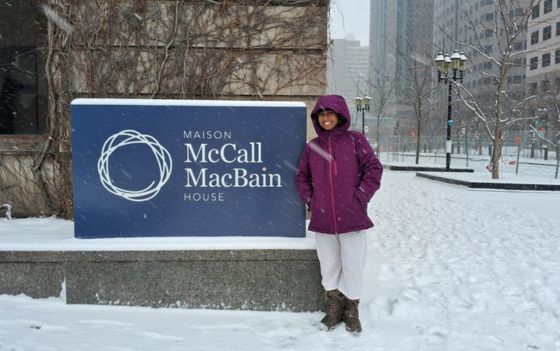
Kiran's story is pure inspiration! Growing up in Kolkata she juggled family and studies. “Having to raise three children wasn’t easy for my parents, but World Vision India supported my education and helped me discover my passion for social issues.” World Vision India’s Snehadeep community project and Play for Peace programme, conducted workshops on life skills, street plays, and puppet shows which became platforms for her to find her voice.