The Journey of Your Rupee: How Donations to World Vision India Reach Children and Communities
You click "donate." Your rupee leaves your account. But where does it actually go?
It's the question every thoughtful donor asks, and it deserves a transparent answer. Understanding the journey of your contribution - from your wallet to the child it helps - reveals not just where money flows, but how generosity transforms into genuine impact. Let's trace that path.
Stage One: The Decision to Give
Your donation journey begins with a choice. Whether ₹500 or ₹50,000, your decision joins resources from thousands of others, creating collective power that individual contributions alone cannot achieve. World Vision India pools donations to fund comprehensive programs addressing poverty's interconnected causes - because hunger, lack of education, poor health, and unsafe water don't exist in isolation.
This pooling model ensures sustained impact rather than scattered, short-term interventions that fade once funding stops.
Stage Two: Financial Management and Accountability
Before reaching communities, donations flow through financial systems, ensuring transparency and compliance. This includes:
Banking and Documentation - Every rupee is tracked through audited accounts. World Vision India maintains records meeting regulatory requirements,s including FCRA (Foreign Contribution Regulation Act) compliance, Income Tax regulations, and statutory audits.
Operational Costs - A portion covers essential overhead - staff salaries, office infrastructure, technology systems, and legal compliance. While donors understandably want maximum money reaching beneficiaries, organizations without proper administration waste resources through inefficiency. Reputable NGOs typically allocate 70-85% directly to programs, with 15-30% covering operations and fundraising.
World Vision India publishes annual reports detailing exact expenditure breakdowns, giving donors full visibility into financial allocation.
Stage Three: Community Selection and Needs Assessment
Your rupee doesn't fund random acts of charity - it supports strategically selected communities where need is greatest and sustainable impact is possible. Selection involves:
Geographic Prioritization - Identifying regions with high poverty rates, poor child welfare indicators, limited government services, and low NGO presence.
Community Engagement - Field teams don't arrive with preset solutions. They spend weeks engaging children, parents, village leaders, and local officials. What are the community's biggest challenges? What solutions do they envision? What local resources exist?
This participatory assessment ensures programs address real needs, not external assumptions. A village facing water scarcity needs wells, not tablets. Another battling malnutrition needs kitchen gardens and nutrition education, not sports equipment.
Stage Four: Program Design and Implementation
Based on assessments, World Vision India designs integrated programs tackling multiple issues simultaneously because child well-being depends on holistic support:
Education Initiatives - School infrastructure improvements, teacher training, learning materials, remedial classes for struggling students, and scholarship support for vulnerable children.
Health and Nutrition - Immunization camps, growth monitoring, nutrition supplementation for malnourished children, health awareness sessions, adolescent health programs.
Water, Sanitation, and Hygiene (WASH) - Constructing wells and hand pumps, building household and community toilets, hygiene behavior change campaigns, and water quality testing.
Livelihood and Economic Development - Vocational training for youth, forming women's self-help groups, linking farmers to markets, financial literacy programs, supporting small enterprise development.
Child Protection - Awareness campaigns against child marriage and child labor, establishing child protection committees, supporting education as an alternative to work, and creating safe spaces for children.
Your donation funds field staff salaries, program materials, infrastructure construction, training facilitation, and monitoring systems. When you contribute ₹10,000, imagine it enabling:
- Educational support for 20 children for three months
- Construction materials for two household toilets
- Nutrition supplements for 100 children for one month
- Vocational training for five adolescent girls
- Health screening for 150 children
The impact multiplies because programs target entire communities, creating environments where all children can thrive.
Stage Five: Community Participation and Ownership
World Vision India doesn't work *for* communities - it works *with* them. Community participation is non-negotiable:
Local Contribution - Communities contribute labor, locally available materials, and land. Village committees oversee projects. Parents join school management teams. Women's groups drive economic initiatives.
Capacity Building - Programs train local leaders, teachers, health workers, and volunteers who continue work after external support ends.
Co-Investment - Communities often contribute 10-20% of project costs through labor and materials, creating ownership that ensures sustainability.
When communities' own initiatives, impact lasts. The well continues functioning because villagers maintain it. School feeding programs persist because parent committees manage them. Your rupee seeds change that outlives the initial funding.
Stage Six: Monitoring, Evaluation, and Course Correction
Throughout implementation, rigorous monitoring ensures accountability:
Regular Data Collection - Field staff track indicators - children's nutrition levels, school attendance rates, families accessing clean water, household incomes, and child protection cases.
Periodic Evaluations - External evaluators assess program effectiveness, gathering beneficiary feedback and measuring outcomes against targets.
Financial Audits - Independent auditors verify fund utilization, ensuring donations reach intended purposes without leakage or misuse.
Adaptive Management - When data shows something isn't working, programs adjust. This flexibility prevents wasting resources on ineffective approaches.
Your rupee funds this critical oversight, protecting against waste and maximizing impact.
Stage Seven: Long-Term Transformation
The real power of your donation reveals itself over the years. A malnourished child receiving nutrition support grows healthy, attends school regularly, and eventually breaks the cycle. A woman trained in tailoring starts a small business, employs others, and sends her daughters to school. A village with clean water sees childhood illness drop, and women are freed from hours of water collection to pursue income activities.
World Vision India tracks long-term outcomes through follow-up studies. Communities receiving support 10-15 years ago show sustained improvements - better child nutrition, higher education levels, improved livelihoods, and stronger local institutions. Your rupee contributes to generational transformation.
Transparency: Your Right to Know
World Vision India publishes annual reports detailing income sources, expenditure categories, program outcomes, and beneficiary numbers. Financial statements undergo statutory audits. Program evaluations are conducted independently. These documents are publicly available.
This transparency ensures donors can verify claims, assess effectiveness, and make informed giving decisions. Organizations resisting transparency should raise red flags.
The Complete Circle
Your rupee travels through strategic planning, skilled implementation, community partnership, rigorous monitoring, and sustained commitment. It becomes textbooks in children's hands, clean water in homes, skills training for youth building futures, and hope in communities reclaiming dignity.
No single rupee solves poverty. But joined with thousands of others, guided by evidence-based strategies and delivered through dedicated field teams working alongside communities, your generosity creates lasting change.
The journey of your rupee is ultimately the journey from compassion to transformation - transparent, accountable, and measurably impactful. And that's a journey worth supporting.
Kiran's Inspiring Journey to Canada
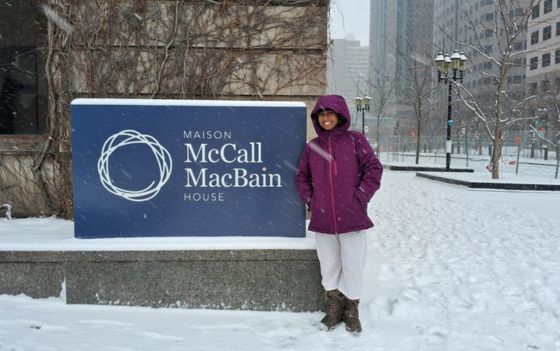
Kiran's story is pure inspiration! Growing up in Kolkata she juggled family and studies. “Having to raise three children wasn’t easy for my parents, but World Vision India supported my education and helped me discover my passion for social issues.” World Vision India’s Snehadeep community project and Play for Peace programme, conducted workshops on life skills, street plays, and puppet shows which became platforms for her to find her voice.