Leave no one behind
With every other girl reposting it, the #MeToo hashtag trended on social media in October. It was used more than one million times in the US, Europe, the Middle East, and beyond. Within 24 hours, 4.7 million people around the world engaged in the #MeToo conversation through Facebook.
Violence against women and girls is one of the most widespread and devastating human rights violations in our world today. According to data from 2005 to 2016 for 87 countries, 19 per cent of women between the ages of 15 and 49 said they had experienced physical or sexual violence by an intimate partner (UNESCO, Progress towards the Sustainable Development Goals). In India, 327,394 cases of crime against women were reported in 2015 (NCRB).

#MeToo gave some women the courage to speak about their abusers. The women who never talked about their abusers either lacked the courage or lived in conditions where the news never reached them.
Not only sexual harassment, but violence against women and girls takes various forms—child marriage, female genital mutilation, domestic violence, and denial of education, to name a few.
31-year-old Pushpavalli from Pudukkottai faced violence from her alcoholic husband ever since the day of their marriage. The responsibility of looking after the family rested on her shoulders as her husband never brought home anything that he earned. “My kids were afraid to come home after school. They hid under the coat or behind the shelf when they heard their dad’s voice,” says Pushpavalli.
Now, she is busy at the site of their new house being built. Pushpavalli had the chance to attend various awareness programmes organised by World Vision India in her village. After the training, with her newfound confidence, she encouraged her husband to attend de-addiction sessions. Her husband no longer drinks. They were able to start a new life, making their home a nurturing place for their children.
And a few more…
“I never thought we would have a regular income. I was really worried about my children’s future. But now, I earn up to INR 300 a day,” says Sarita Devi from Patna. The Self-Help Group (SHG) that Sarita is a part of raised funds to buy her a sewing machine. A self-reliant Sarita can now support the education expenses of her five children.
“I had no idea how a bank worked; I didn’t even know how to take a local bus. But now I am confident enough to meet the local government officers. I think it is very important to save money, go out, and be empowered as a woman,” says Sundari, who is an active member of the SHG in her area.
Violence against women and girls can only be curbed in our society by educating and empowering them, not just by punishing the culprits.
Established systems should be in place to educate and empower women and girls, who represent half of our population and, hence, half of our potential. Accomplishing SDG V (Achieve gender equality and empower all women and girls) thus becomes crucial to all areas of a healthy society, from reducing poverty to promoting the health, education, protection, and well-being of our children.
As the UniTE campaign (to end violence against women) puts it forth, let’s leave no one behind.
Labels: #abuse #childmarriaage #domesticviolence #femalegenitalmutilation #ittakes #SHG #violenceagainstwomen #worldvisionindia
Kiran's Inspiring Journey to Canada
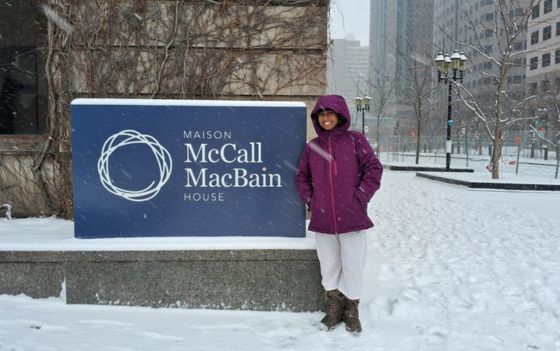
Kiran's story is pure inspiration! Growing up in Kolkata she juggled family and studies. “Having to raise three children wasn’t easy for my parents, but World Vision India supported my education and helped me discover my passion for social issues.” World Vision India’s Snehadeep community project and Play for Peace programme, conducted workshops on life skills, street plays, and puppet shows which became platforms for her to find her voice.