Marriages not made in heaven
The COVID-19 pandemic and the subsequent lockdown in India, which began on 24th March 2020, had devastating effects—particularly on the most vulnerable children and families. With a complete loss of income due to halted livelihoods, many families were forced to borrow money just to afford rations and food supplies. In some extreme cases, families even resorted to child marriage in an effort to ease financial burdens. Desperation in those stressful times led to heartbreaking decisions.
According to media reports, the government helpline for children—CHILDLINE 1098— witnessed a sharp rise in SOS calls from children and families in distress throughout the lockdown period. On 29th April 2020, Union Minister Smriti Irani tweeted that the helpline had prevented 898 instances of child marriage during the lockdown. According to Childline India, the NGO that runs the helpline, most of these cases originated from Tamil Nadu, Karnataka, Odisha, Andhra Pradesh, and Telangana.
https://twitter.com/smritiirani/status/1255422482229714946?)
Through World Vision India’s Combat Child Trafficking for Sexual Exploitation project in West Bengal, staff members successfully stopped 13 cases—nine in Basanti and four in Siliguri—of child marriage and elopement between April and May 2020. In the previous year, 2019, the project team had prevented approximately 55 child marriages, intervened in 12 trafficking cases, and filed more than 30 First Information Reports (FIRs) at local police stations.
This programme was launched by World Vision India in 2017 as part of its global initiative Every Last One (ELO), in response to the alarming prevalence of child trafficking in West Bengal. The project focused on five trafficking-prone districts located near the Indo-Nepal and Indo-Bangladesh international borders: 1) South 24 Parganas District 2) North 24 Parganas District 3) Kolkata District 4) Darjeeling District and 5) Jalpaiguri District.

The project aimed to strengthen protection and response mechanisms for children living in red-light areas and for mothers involved in Commercial Sexual Exploitation (CSE), in an effort to prevent second-generation trafficking. It also extended preventive services to rural areas in Darjeeling and South 24 Parganas districts—locations that often served as source points for traffickers. The intervention focused on trafficking prevention through Girl Power groups, Men Care groups, and Village Level Child Protection Committees (VLCPCs), among other programmes.
During the lockdown, when movement was heavily restricted, volunteers and child protection groups became the project’s eyes and ears within the community. Thanks to their vigilance and timely reporting, the project teams were able to intervene quickly to protect children at risk.
Sandip Bhowmick, a technical specialist with the project based in the Basanti block of South 24 Parganas District, played a key role in stopping many of these cases during the lockdown. Having worked in Basanti for the past eight years, Sandip consistently responded to distress calls from community members in their moments of need.
Because of his strong network with the district administration and police, as well as the trust he had built within the community, Sandip became the go-to person whenever child protection issues arose. He was one of the many hidden heroes who stepped up to the challenge during the COVID-19 crisis.
When asked how they identified cases, Sandip explained, “Our first source of information came from the Girl Power groups, Men Care groups, VLCPCs, and volunteers in various villages across the Basanti block. They were able to identify potential cases of child abuse and child marriage and knew which families and girls were at high risk of trafficking. Whenever something happened, they would call us first. We would then guide them on the next steps.”
He continued, “The second source was the Block Development Officer, who would call us and ask us to accompany him whenever he heard of a child marriage case. The third source was Childline—the organisation that runs the 1098 child helpline. Because of our strong grassroots presence, we were able to respond quickly to cases within our block. Lastly, we also received information directly from local people. During our awareness programmes, we educated the community about Childline (1098) and encouraged them to reach out if they ever suspected child abuse. Many people now call us for support and guidance when something happens.”
As soon as Sandip and his team received a report—whether from volunteers or local contacts—they ensured that a formal complaint was filed with Childline. Often, multiple community members called Childline to register the same case, increasing pressure on the police and helpline to act swiftly.

Once a complaint was registered, Childline, the Block Development Officer (BDO), or the police would get in touch with Sandip and his team and accompany them to intervene in the case—often to stop a child marriage from taking place. The team would begin by gathering detailed information about the families involved, assessing any complications, potential threats, or political influences. They would then strategise the best way to resolve the issue and adjust the plan as needed.
“The pandemic posed challenges in how we approached cases,” Sandip explained. “We had to ensure there was no breach in law and order, and that no crowd gathered because of the sensitive nature of the situation.”
When asked whether cases had increased during the pandemic, Sandip replied, “Yes, the number of instances definitely went up, and children became even more vulnerable. Families were already struggling to provide three meals a day. With income completely stopped and livelihoods lost, especially for daily wage earners, the pressure on families became unbearable.”
Despite the risks, Sandip and his team continued to act on every call for help, putting themselves in harm’s way to protect children. “There are always risks in what we do,” Sandip admitted. “I often have to visit the police station for cases, sometimes multiple times. But at the end of the day—lockdown or not—if there’s a child in distress, we have to respond. I feel it is my duty to answer such calls.”
-Neola D’Souza
Labels: #childmarriage #covid-19 #coronavirus #pandemic #awareness #childsexualabuse #childprotection #worldvisionindia #wvindia #lockdown
Kiran's Inspiring Journey to Canada
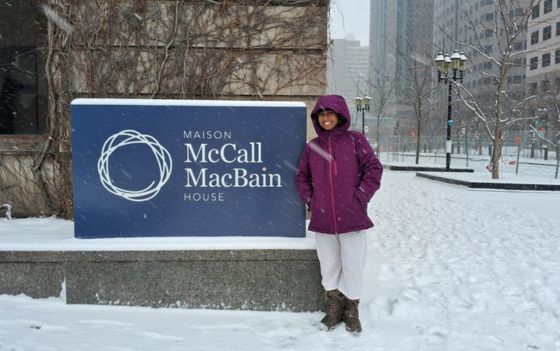
Kiran's story is pure inspiration! Growing up in Kolkata she juggled family and studies. “Having to raise three children wasn’t easy for my parents, but World Vision India supported my education and helped me discover my passion for social issues.” World Vision India’s Snehadeep community project and Play for Peace programme, conducted workshops on life skills, street plays, and puppet shows which became platforms for her to find her voice.