From Liquor to Luxury Tea: How an NGO’s Women Livelihood Program Is Transforming Communities in Meghalaya
There was a time when a village in Meghalaya's East Khasi Hills was associated with a very different kind of livelihood.
Country liquor was widely produced in the community. Poverty was a persistent challenge. Opportunities for families were limited.
Today, when people speak about the village, they speak about tea.
Not just any tea, but organic green and white tea produced by local farmers and sold under the name Urlong, a word that means “Dreams Come True”.
The journey from one livelihood to another did not happen overnight.
It began with a community willing to imagine that its future could look different.
A Different Kind of Dream
For the people of that village, change was never simply about finding a new product to sell.
It was about creating a livelihood that could provide families with greater stability and give children more opportunities.
The village's women played an important role in this journey.
Women who had once been involved in brewing a traditional rice and millet liquor known as Pyrsi began exploring a very different enterprise: tea production.
With support from World Vision India, a tea-processing unit was established, while funding was facilitated from the Ministry of Tribal Affairs.
The community began building the skills and infrastructure needed to move from growing tea leaves to processing and marketing their own product.
This distinction mattered.
Instead of simply producing a crop and selling it as a raw commodity, farmers had an opportunity to participate further along the value chain.
The village was beginning to build something of its own.
This transformation reflects the approach of a women empowerment ngo india, where creating meaningful economic opportunities for women can contribute to stronger families, greater confidence and more resilient communities.
From Saplings to a Livelihood
Today, a collective of 20 farmers, including 11 women, produces more than 3,000 kilograms of organic tea leaves each year.
The transformation has also spread beyond that village.
World Vision India distributed 60,000 tea saplings to seven neighbouring villages, giving other communities the opportunity to explore the same livelihood model.
What began in one village was becoming a wider community development effort.
The tea itself became a symbol of what was possible when local knowledge, community leadership and external support came together.
The village headman played a role.
The women of the community stepped forward.
Farmers invested their time and effort.
And World Vision India helped provide some of the resources and connections needed to turn the idea into a functioning livelihood.
This is what makes the story of Urlong particularly significant.
The change was not imposed on the community.
It was built with the community.
That sense of ownership is central to sustainable community development. Lasting change is more likely when communities are able to identify opportunities, participate in decisions and develop solutions that can continue beyond an individual project or intervention.
When Women Lead, Children Benefit
The benefits of a stronger livelihood rarely stop with the person earning the income.
They reach the entire household.
When families have more reliable earnings, they have greater capacity to invest in food, healthcare and education.
For women, having a greater role in an income-generating enterprise can also strengthen their voice within the household and community.
And when women invest in their children's education, the effects can extend into the next generation.
This is why women livelihood programs NGO initiatives can have an impact that goes well beyond income generation. When women have access to skills, productive opportunities and markets, they can contribute more strongly to household resilience and community development.
The Urlong experience also demonstrates the potential of women entrepreneurship NGO programmes that support women to participate in enterprises rather than limiting them to traditional economic roles.
Mr D. L. Nongspung, Lead Initiator of Urlong Tea, described the shift in the community:
“The community went from being infamous for alcoholism to becoming producers of world-class tea. Now, in every household, children have become the centre of our investment, especially the girl child.”
That is perhaps one of the most meaningful measures of the village's progress.
The success of a livelihood is not only measured by kilograms of tea produced or the markets it reaches.
It is also measured by what families are able to do with the income.
Are children staying in school?
Are families investing in their health?
Are girls being given the same opportunities as boys?
Are young people beginning to imagine a future within their own community?
These are the changes that make economic development meaningful.
A Model That Can Grow
This story's experience shows why community development requires more than a one-time intervention.
A processing unit alone would not have been enough.
Saplings alone would not have been enough.
What made the difference was the combination of community ownership, local leadership, skills, infrastructure and access to resources.
The result is a livelihood that can continue to grow.
As tea production expands and neighbouring villages receive saplings, more families have the opportunity to participate.
The model also demonstrates the importance of women in community-led development.
When women are given opportunities to contribute to household income and community decisions, the benefits can extend to children and future generations.
For organisations working as impact driven ngos, stories such as Urlong demonstrate the value of combining livelihood development with broader investments in family and community wellbeing.
A stronger household economy can create opportunities for children to remain in school, including through efforts supporting education for poor children. It can also contribute to better access to healthcare, nutrition and other essential services.
Dreams That Take Root
Today, the story of that village is no longer defined by the challenges that once held it back.
Its story is being written through tea gardens, local enterprise and families investing in their children's futures.
The name Urlong means “Dreams Come True”.
In many ways, the name reflects what has happened in the village.
But the dream is not complete.
Every new tea sapling planted in a neighbouring village represents another possibility. Every woman who participates in the collective represents another voice in the community. Every child who stays in school represents another generation with more choices than the one before.
That is what genuine community development can look like.
It is not change delivered from outside. It is change built from within, with communities leading the way and the right support helping their ideas take root.
The story of Urlong also reminds us that livelihood transformation is ultimately about people. Tea may be the product, but the real outcome is greater opportunity: women gaining confidence, families strengthening their incomes, children receiving more opportunities and communities discovering what they can achieve together.
For a NGO for Children in India, supporting children means looking at the wider environment in which they grow. When families have stronger livelihoods and women have meaningful economic opportunities, children can have a more secure foundation for their futures.
From liquor to luxury tea, the transformation of this community is therefore more than a story about changing livelihoods.
It is a story about changing possibilities.
It is about a village that chose to dream differently, and then worked together to make that dream take root.
Kiran's Inspiring Journey to Canada
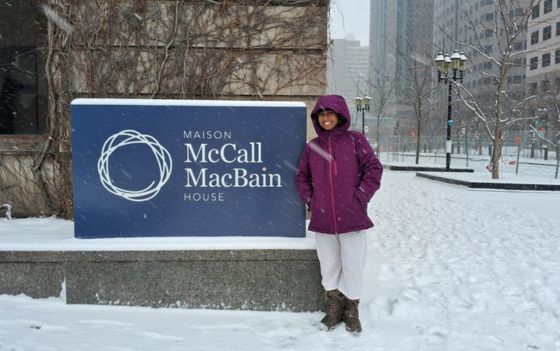
Kiran's story is pure inspiration! Growing up in Kolkata she juggled family and studies. “Having to raise three children wasn’t easy for my parents, but World Vision India supported my education and helped me discover my passion for social issues.” World Vision India’s Snehadeep community project and Play for Peace programme, conducted workshops on life skills, street plays, and puppet shows which became platforms for her to find her voice.