The past year at a glance
With every year, we try to move closer to our goal of building a nation fit for children. This year we are happy to share with you the small, but significant strides we have been able to make in that direction.
Below are some statistics of the work that we have done through our area development programmes in 140 districts across 26 states in the areas of Education, Maternal and child health and nutrition, Water, Sanitation & Hygiene and Livelihood, over the past year.
Maternal and child health and nutrition

- Through our nutrition programmes, 29,568 children, aged 6–59 months, who were identified as underweight have gained adequate weight.
- 82.11% of children were covered with essential vaccines
- 2,41,775 children, aged 12–17 years, have access to various health programmes (Integrated Child Development Services and school health programme)
- 1,17,483 adolescent girls were educated on the importance of consuming iron and folic acid tablets
- 89,192 mothers of children aged 0–23 months received a post-natal visit from a trained health care worker within two days after the birth of their youngest child
- We have reached 19481 pregnant women, 11380 newborn children and 57519 children aged 1–24 months through Timed and Targeted Counselling (ttC). ttC is a community health worker approach, extending primary health care counselling at the household level.
- 219 anganwadi (childcare) centres fully functional with basic facilities
- 198 early childhood care and development centres functioning properly
Education:

- Our educational initiatives have helped 26,137 children complete remedial coaching so that they are ready for formal schooling.
Water, Sanitation and Hygiene

- Through our Water, Sanitation and Hygiene programmes, 1,81,009 people received access to a basic drinking water source and 1,46,335 people to household sanitation facilities.
Livelihood:

- 2750 farmers received improved seed varieties, micro/drip irrigation sets, demonstration sites - crop diversity, training on organic fertilisers
- 3646 extremely poor households were assisted through the Graduation Model. The Graduation Model is a multi-sectoral approach to address extreme poverty in the most vulnerable households. It is a 24-month programme that combines four distinct elements—social protection, food security, financial inclusion and livelihood development—to help vulnerable families come out of extreme poverty and attain sustainable livelihoods.
None of these developmental initiatives would have been possible without the help of generous sponsors and donors like yourselves. In this coming year too, we hope to positively impact the lives of more children.
-Johan Christopher
Labels: #childhealth #education #humanitarian #WorldVision #India #hygiene #livelihood #sanitation #water #worldvisionindia #worldvision
Kiran's Inspiring Journey to Canada
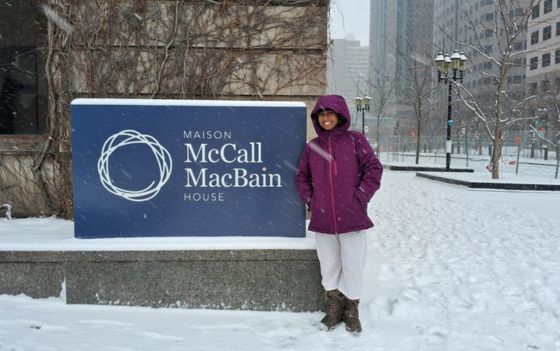
Kiran's story is pure inspiration! Growing up in Kolkata she juggled family and studies. “Having to raise three children wasn’t easy for my parents, but World Vision India supported my education and helped me discover my passion for social issues.” World Vision India’s Snehadeep community project and Play for Peace programme, conducted workshops on life skills, street plays, and puppet shows which became platforms for her to find her voice.