Six Women, One Strength: A Women's Empowerment Success Story from Coastal Tamil Nadu
Among the women empowerment success stories that rarely make headlines, Rahima's stands out for its honesty, six women sharing one small home, one modest business, and one collective determination to keep a child in school and a household standing.
There is no single dramatic turning point in their story. What changed their lives was something far quieter: practical support that gave them room to breathe, plan, and move forward with greater confidence.
Six Women, One Household, One Shared Burden
Rahima lives in a small tsunami rehabilitation house in Tamil Nadu alongside her elderly mother, five widowed sisters, and a young niece named Yasmin. Between them, they carry the accumulated weight of loss; most have lost their spouses, and the daily responsibility of keeping a household functional on an income that was never guaranteed.
Their livelihood was a modest idlis and appam vending business. Mornings began before sunrise: soaking rice, preparing batter, cooking in a small kitchen, and selling within the neighbourhood. The work was physically demanding. The income was uncertain.
"There were many days when we worried about how to manage our expenses," Rahima recalls.
Her husband passed away several years ago. Her son works as a daily wage labourer. Her married daughter lives separately. In the house that remained, it was the women, together, who held everything in place.
The Dream That Kept Them Going
Amid the daily pressure of survival, one priority remained constant across all six women: Yasmin, Rahima's niece and her younger sister's daughter, would stay in school.
The older generation had grown up without the educational opportunities they had hoped for. The circumstances of widowhood, poverty, and social hardship had narrowed their options early. But for Yasmin, they wanted something different.
"As women and widows, life is difficult in society," Rahima says quietly. "But we wanted at least one child in our family to have a secure future."
This is the thread that runs through so many poverty-to-prosperity stories rooted in women's resilience, not a pursuit of personal gain, but a long-term investment in the next generation, made by people who have very little to spare.
Practical Support, Real Difference
Hoping to strengthen their livelihood, the family sought support for their small food business.
They received a flour grinder along with grocery assistance, modest in scale but immediately meaningful in its impact. Before, preparing batter by hand was time-consuming and physically exhausting. The grinder changed that. It improved production efficiency, reduced labour, and allowed the women to increase their output and improve their sales.
For the first time in a long while, the household began to experience something it had not had in years: a degree of financial predictability. Fewer debts. Better planning for daily expenses. A small but real reduction in the anxiety that had become part of ordinary life.
These are the kinds of shifts that community change stories are built on, not transformations that happen overnight, but incremental improvements that compound into stability.
What Stability Made Possible
With a steadier income came clearer priorities.
Yasmin continues her education at a nearby primary school without disruption. Her school needs, books, materials, and fees are now easier for the family to manage. Her health and well-being are no longer at the mercy of whether any given week's sales were good or poor.
For six women who had spent years absorbing uncertainty, that consistency is significant. It is not a comfortable life by most measures, but it is a more dignified one, and a more forward-looking one.
"Now we feel more confident about our future," Rahima says.
The Quiet Strength Behind the Story
What makes Rahima's family's experience one of the more grounded NGO impact stories is precisely what it does not include: it does not involve a dramatic rescue or a complete reinvention of their circumstances. These women were already working. They were already managing. They were already investing in Yasmin's future.
What changed was the margin, a small but meaningful improvement in their capacity to sustain what they had already built.
In many vulnerable communities across India, widowed women face overlapping challenges: financial insecurity, social isolation, and limited access to livelihood support. Yet families like Rahima's continue to move forward through shared responsibility, collective care, and a quiet refusal to give up on the generation coming after them.
That resilience does not need to be romanticised. It simply needs to be recognised, and, where possible, supported with the practical tools that make it more sustainable.
A Kitchen That Now Carries More Than Income
Today, the small kitchen that once represented daily struggle has become a place of renewed possibility. The work is the same, idlis, appams, early mornings, neighbourhood rounds, but the foundation beneath it is steadier.
Six women who once took life entirely one day at a time now have a modest but genuine sense of what tomorrow might look like. And Yasmin, the child at the centre of all their hope, goes to school every day.
That, in its own way, is everything.
Key Takeaways
- Livelihood support for women has a direct impact on children's education and household stability
- Widowed women in vulnerable communities often sustain entire families with little external support
- Practical, targeted assistance, even modest in scale, can meaningfully shift a household's financial security
- Women's empowerment success stories are frequently rooted in collective resilience, not individual heroism
This story has been shared with the family's well-being and dignity at the centre. Names have been used with appropriate sensitivity to the context of the case.
Kiran's Inspiring Journey to Canada
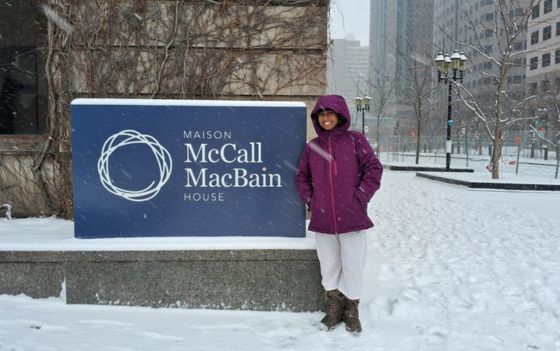
Kiran's story is pure inspiration! Growing up in Kolkata she juggled family and studies. “Having to raise three children wasn’t easy for my parents, but World Vision India supported my education and helped me discover my passion for social issues.” World Vision India’s Snehadeep community project and Play for Peace programme, conducted workshops on life skills, street plays, and puppet shows which became platforms for her to find her voice.