Sound advice for sound health
“I am thankful to World Vision for helping me with my child’s treatment during this difficult time”, says Bhumisuta with a smile on her face.
Twenty-three-year-old Bhumisuta is a homemaker who lives with her husband and five-month-old son in a village in Odisha. World Vision (WV) India has been working in Bhumisuta’s village since 2010 through the Loisingha Area Development Programme (ADP). The ADP focuses on interventions in projects like malnutrition and sponsorship.

Bhumisuta’s husband, Pabitra (28), works as a daily wage labourer. However, due to the COVID-19 situation and the lockdown, he had lost his job. Occasionally, he would take up agricultural work or other forms of manual labour in the village, if someone requested his help. Since his family falls in the below poverty line category, they were eligible to receive three month’s rations provided by the Government in advance as part of its COVID-19 response. His family managed these provisions while he looked for a stable job within the village.
(https://pib.gov.in/PressReleaseIframePage.aspx?PRID=1622147)
Prior to the lockdown and after Bhumisuta conceived her first and only child, “Prince”, she was enrolled in the village Care Group Model, a community-based strategy to improve the positive behaviour change in a large population regarding maternal and child, health and nutrition. However, she discontinued when she opted to leave for her native village hoping for better care for herself and her child from her parents. Due to her lack of knowledge about antenatal care and the importance of proper nutritional intake, her baby boy, who weighed two and a half kilograms at birth, gradually started losing weight.
The family qualified to receive Rs.5000 from the government through the *Janani Suraksha Yojana scheme. But their lack of knowledge of the care and nutritional needs of a newborn baby and its mother often left them scrambling to nurse their baby boy back to health, as he fell sick regularly. When Bhumisuta returned to her husband’s house, they yielded to the common practice of the villagers and opted to consult numerous village quacks instead of going to a hospital. For their newborn who was on the brink of being severely malnourished, this made no improvement to his health whatsoever.
When WV India was implementing the Care Group Approach in Prince’s village. The village Care Group promoter and Care Group Volunteer did regular trainings, meetings and follow-up home visits for all the members of the group, which included 14 pregnant women, lactating mothers and mothers with children under the age of two. They helped Bhumisuta re-enroll into the group. After she resumed, an assigned care group volunteer of WV India came to know about their problem. She went to their home, counselled them as a couple and motivated them not to believe in village quacks but rather to take their child to the hospital for treatment. Despite her advice, the young parents were reluctant due to fear of contracting COVID-19 disease.
Recognising the need for support and encouragement to save the child’s life, the care group supervisor came forward and accompanied them to the doctor. He helped them in all the necessary procedures in the hospital. The doctor prescribed medicines for Bhumisuta’s son after examining him and now after proper treatment, the child’s health has been improving since. Baby Prince is now five months old and has gained a healthy weight of 4.2kgs.
In response to the lockdown to curb the spread of COVID-19 pandemic, WV India is providing cash transfers and dry rations to migrant families, as well as spreading awareness on the importance of hygiene etiquette among the community people.
In the month of May, as part of WV India’s COVID-19 response, a cash transfer amount of Rs.1,500 was provided to the family as they lie in the most vulnerable beneficiary category. Bhumisuta acknowledges and appreciates the support she received from the Care Group team of WV India during this crucial lockdown situation.
Bhumisuta says, “I would like to thank World Vision for implementing this Care Group Programme which has improved my son’s health. They also came forward to help us during this lock down period.” She further added that she would attend the care group meetings regularly and get the appropriate knowledge to take care of her child’s health.

“I am very thankful to World Vision as this organisation has provided Rs.1500 to us during this difficult period and has given us the knowledge for providing better health and hygiene for the child and mother. I will never forget this help in my life! May God bless this organisation I pray", says Pabitra Bag, Bhumisuta’s husband, very happily.
The Care group volunteer came as a ray of hope to this family that was in despair during this crisis situation.
=====xxxx======
*Janani Suraksha Yojana (JSY) scheme is a safe motherhood intervention under the National Health Mission. It is being implemented with the objective of reducing maternal and neonatal mortality by promoting institutional delivery among poor pregnant women. The scheme, launched on 12 April 2005 by the Hon’ble Prime Minister, is under implementation in all states and Union Territories (UTs), with a special focus on Low Performing States (LPS).
JSY is a centrally sponsored scheme, which integrates cash assistance with delivery and post-delivery care. The Yojana has identified Accredited Social Health Activist (ASHA) as an effective link between the government and pregnant women.
(https://nhm.gov.in/index1.php?lang=1&level=3&lid=309&sublinkid=841)
Labels: #caregroupmodel #childhealth #covid-19 #coronavirus #pandemic #worldvisionindia #wvindia #lockdown #nutrition
Kiran's Inspiring Journey to Canada
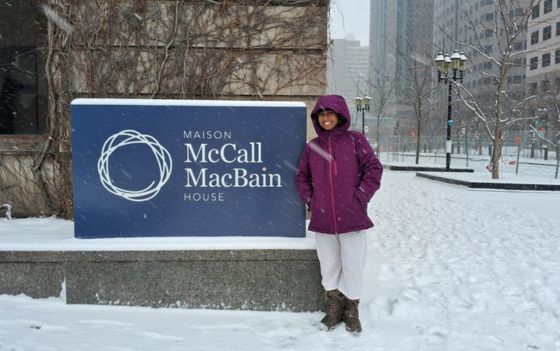
Kiran's story is pure inspiration! Growing up in Kolkata she juggled family and studies. “Having to raise three children wasn’t easy for my parents, but World Vision India supported my education and helped me discover my passion for social issues.” World Vision India’s Snehadeep community project and Play for Peace programme, conducted workshops on life skills, street plays, and puppet shows which became platforms for her to find her voice.