Strengthening Rural Families: How Women Protect Children’s Rights
In rural communities, a child’s well-being often begins at home. When families are stable, children are more likely to be safe, healthy, nourished, and in school. But when poverty, malnutrition, and lack of support affect a household, children face a much greater risk of missing out on the rights and opportunities they deserve.
This is why protecting children’s rights is not only about laws or institutions. It is also about strengthening families, especially by supporting the women who care for children every day. In many rural homes, women are the ones who manage food, health, education, and emotional care. When they have access to knowledge, resources, and leadership opportunities, they are often better able to protect children and build safer, stronger homes.
This approach closely reflects World Vision India’s current public positioning. The organisation describes its work as a community-based model that improves children’s access to healthcare, education, protection, and opportunities to participate in society, while also supporting families and communities for long-term change.
Why rural children remain vulnerable
Many children in rural communities still grow up facing serious challenges. Poverty, weak access to healthcare, food insecurity, school dropout, and unsafe living conditions can all affect a child’s growth and sense of security.
When families struggle to meet basic needs, children are often the first to feel the impact. They may miss nutritious meals, fall behind in school, or become more vulnerable to neglect, exploitation, or harmful practices. This is why child well-being must be understood as more than one issue. Health, education, protection, and family stability are all connected.
World Vision India’s current programme pages reflect this same integrated view, linking child well-being to education, health and nutrition, WASH, child protection, and livelihoods.
Why women are central to protecting children’s rights
Women are often the strongest everyday protectors of children’s rights within the family. They are usually the first to notice whether a child is eating well, staying healthy, going to school, or facing risks.
When women have greater access to education, livelihood support, health information, and leadership opportunities, the benefits often reach children first. Families are better able to manage nutrition, seek medical care, prioritise education, and create safer home environments.
This connection between women’s empowerment and child well-being is also reflected in World Vision India’s messaging around women’s empowerment and community development. The organisation’s public content links women’s progress with stronger families, better opportunities, and broader community transformation.
How stronger families help children thrive
Children are more likely to thrive when families have the support they need. A stronger family can provide daily care, emotional security, consistent nutrition, and encouragement to stay in school.
This is why long-term community development matters so much. Instead of only responding to immediate need, many child-focused programmes work with families over time to improve health, education, livelihoods, and support systems around children.
World Vision India’s website describes this as integrated development for lasting change. Its current public materials emphasise that sustainable progress comes from supporting not just individual children but also their families and communities.
The role of women’s leadership in rural communities
Women’s leadership can make a powerful difference beyond the household too. When women take part in community groups, local decision-making, or awareness programmes, they often help identify risks facing children and push for practical solutions.
This can include encouraging school attendance, raising awareness about child protection, promoting maternal and child health, and supporting better access to sanitation, nutrition, or community care. Women who step into leadership roles often become role models for other mothers and girls, creating a ripple effect that strengthens the whole community.
World Vision India’s public description of its approach includes leadership development alongside health, education, and economic development as part of its community-based work.
Why nutrition and child health matter
A child’s rights include the right to health, care, and proper nutrition. But in vulnerable rural households, malnutrition remains a serious barrier to healthy development.
Without enough nutritious food, children are more likely to face illness, low energy, poor concentration, and long-term developmental setbacks. That is why women’s knowledge of nutrition, breastfeeding, child feeding practices, and health care can be so important.
World Vision India’s nutrition and health support pages currently emphasise caregiver engagement, trained community health workers, practical nutrition guidance, and child-friendly community spaces as part of helping children stay healthy and nourished.
Supporting children through community-based action
Protecting children’s rights becomes stronger when communities share responsibility. Families need support from schools, local leaders, community workers, and development organisations that help create a safer environment for children.
Community-based action can improve local awareness, reduce harmful practices, strengthen support networks, and connect vulnerable families to services that matter. This kind of shared responsibility makes child protection more sustainable because it becomes part of everyday community life.
World Vision India repeatedly frames its work through partnerships with communities, civil society, and government systems to provide holistic support and strengthen structures around children.
How this connects to World Vision India’s work
To keep this aligned with current website language, it is better to describe World Vision India in broad but accurate terms rather than using old figures. The site currently says the organisation works to improve children’s access to healthcare, education, protection, and opportunities to participate in society, while also helping families and communities become more self-sufficient and resilient. It says World Vision India works in 111 districts across 22 states and 1 union territory, impacting around 3 lakh children and their families in over 1,113 communities.
Conclusion
Protecting children’s rights begins much closer to home than many people realise. It begins when families are stronger, women are supported, and communities work together to create safe and healthy environments for children.
When women have the tools, knowledge, and confidence to lead within their homes and communities, children benefit in deeply practical ways. They are more likely to be nourished, protected, educated, and encouraged to dream beyond their circumstances.
Strong rural families create the foundation for child well-being. And when women are empowered within those families, the future becomes safer and brighter for the next generation.
Kiran's Inspiring Journey to Canada
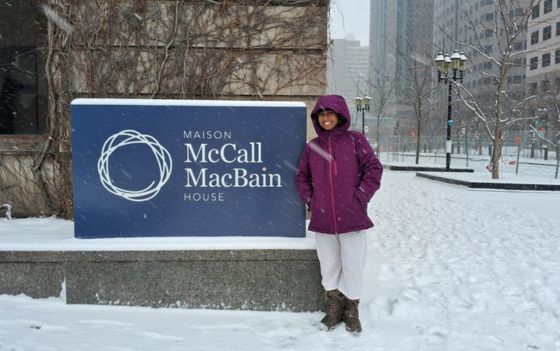
Kiran's story is pure inspiration! Growing up in Kolkata she juggled family and studies. “Having to raise three children wasn’t easy for my parents, but World Vision India supported my education and helped me discover my passion for social issues.” World Vision India’s Snehadeep community project and Play for Peace programme, conducted workshops on life skills, street plays, and puppet shows which became platforms for her to find her voice.