Urban Slums vs Rural Villages: How Childhood Poverty Looks Different and Why It Matters
Poverty in India doesn't wear a single face. A child growing up in Mumbai's sprawling slums experiences deprivation vastly different from one living in a remote Rajasthan village. Both struggle, both lack opportunities, yet their daily realities are worlds apart. Understanding these differences isn't just academic - it's crucial for creating interventions that actually work and policies that reach the children who need them most.
The Density Divide: Crowded vs Isolated
Urban slums are characterized by extreme density. Families squeeze into 100-150 square foot shelters, often sharing single rooms with seven or eight people. Multiple families use one toilet. Narrow lanes barely allow two people to pass. Children grow up without personal space, quiet corners, or room to play. The irony is crushing: surrounded by millions, yet profoundly alone. Neighbors remain strangers. Community bonds are weak.
Rural villages face the opposite challenge - isolation. While children have physical space, they're cut off from services, opportunities, and connectivity. A single school serves multiple villages. Healthcare facilities lie hours away. A sparse population means limited infrastructure investment. The tight-knit community provides social support but can also enforce rigid traditions that limit aspirations, especially for girls.
Health Hazards: Different Threats, Same Vulnerability
In urban slums, children breathe air thick with industrial pollution and vehicle emissions. They drink contaminated water despite living in cities with modern treatment plants - because informal settlements aren't connected to municipal systems. Open drains run through living areas. Communicable diseases spread rapidly in crowded conditions. Malnutrition persists not from food scarcity but from unaffordability; nutritious food is expensive when every rupee matters for rent and purchased water.
Rural children face different health challenges. Malnutrition stems from limited dietary diversity and seasonal food insecurity. Preventable diseases persist due to poor healthcare access and low health awareness. Snake bites, agricultural accidents, and waterborne illnesses are common. However, rural areas offer cleaner air, open spaces, and access to fresh produce during harvest seasons - advantages that urban slum children never experience.
Education: Access vs Quality
Urban slum children often have schools within walking distance. The problem is quality. Municipal schools are overcrowded - 80 students per teacher isn't uncommon. Teaching is minimal, and learning is even less. Many children attend school for years yet graduate functionally illiterate. Private schools nearby are unaffordable. The bigger barrier is opportunity cost: families need children to work - collecting recyclables, street vending, domestic labor - because survival demands every available hand when everything must be purchased.
In rural areas, access is the primary hurdle. Children walk several kilometers to reach primary schools. Drop-out rates spike when secondary schools are even farther. Single-teacher schools struggle across multiple grades. Teacher absenteeism runs high in remote postings. Girls disproportionately drop out due to distance, safety concerns, and pressure for household work. Yet when schools function properly, smaller class sizes can mean better individual attention than urban counterparts receive.
Economic Realities: Visible Wealth vs Agricultural Dependence
Urban slum children grow up witnessing economic activity everywhere - shops, restaurants, construction sites, and factories. They see wealth daily. Glass towers rise beside tin-roof settlements. Children in school uniforms sit in air-conditioned cars at traffic signals. This proximity creates aspiration but also deep frustration. The formal economy is visible yet inaccessible. Many engage in informal child labor: domestic work, workshop jobs, rag picking. Cities offer potential escape routes through education and skills, but competition is fierce and discrimination against slum addresses is real.
Rural children live in agriculture-centered economies. Opportunities are seasonal and limited. Many families are landless laborers or marginal farmers. Children help with crops, livestock, and household tasks. While learning agricultural skills holds cultural value, it limits educational time. The harsh reality is that traditional livelihoods are increasingly unviable, yet alternatives barely exist. Migration to cities becomes the primary option - often leading straight into urban slums, perpetuating the cycle across generations.
Social Challenges: Visibility vs Invisibility
Urban poverty is visible yet ignored. Slum children exist in plain sight - at intersections, railway platforms, construction zones. Society sees them daily but looks away. They face discrimination based on their address. Living in "that slum" affects school admissions, job prospects, and social acceptance. However, this visibility brings advantages: better access to NGOs, government programs, and media attention. Urban poverty is harder to ignore, so interventions follow.
Rural poverty remains invisible to urban World Vision India. Children in remote villages rarely appear in policy discussions or media coverage. Issues like child marriage, severe malnutrition, and educational deprivation persist with less outcry. Out of sight means out of mind. Yet strong community structures provide social safety nets that urban anonymity lacks. Extended families and village networks offer support systems absent in cities where everyone is a stranger.
Why Understanding These Differences Matters
Targeted Interventions - One-size-fits-all programs fail both contexts. Urban children need affordable housing, connected sanitation infrastructure, and quality school improvements. Rural children need transportation solutions, mobile healthcare, and economic alternatives to agriculture. A toilet-building program works differently when there's land (villages) versus when there isn't (slums).
Resource Allocation - Government budgets and NGO programs must acknowledge these distinct needs. Mobile health vans serve rural areas effectively but make little sense in cities where distance isn't the barrier - affordability is. Conversely, affordable childcare programs matter in cities where parents need to work away from home but less so in villages where extended families provide care.
Migration Patterns - Today's rural poor child often becomes tomorrow's urban slum resident. Understanding both contexts creates better support across the migration pathway. Families leave villages seeking opportunities, arriving in cities with rural poverty and acquiring urban poverty on top, losing community support while gaining overcrowding.
Policy and Measurement - Poverty metrics effective in villages may miss urban deprivation, and vice versa. Comprehensive policy requires nuanced data collection that captures how poverty manifests differently across contexts.
Moving Forward: A Two-Front Battle
Breaking childhood poverty in India requires simultaneous action in dense urban slums and isolated rural villages. It means building roads to rural schools while improving urban municipal education. It means bringing healthcare to villages and making city hospitals affordable. It means creating rural employment so migration becomes a choice rather than desperation, while ensuring dignity for those who do migrate.
Both the child waking in a crowded slum and the one waking in an isolated village deserve better. Both face formidable obstacles. But helping them requires different strategies, different resources, and fundamentally different approaches. Only by recognizing how poverty looks different across urban and rural contexts can we build solutions that actually work - not just well-intentioned programs that miss the mark.
Because every child, whether surrounded by millions or by miles of empty fields, deserves a chance at a childhood not defined by deprivation.
Kiran's Inspiring Journey to Canada
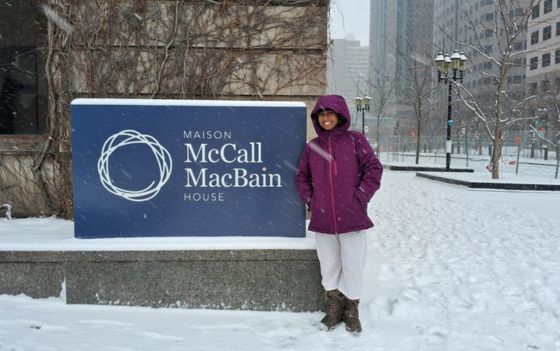
Kiran's story is pure inspiration! Growing up in Kolkata she juggled family and studies. “Having to raise three children wasn’t easy for my parents, but World Vision India supported my education and helped me discover my passion for social issues.” World Vision India’s Snehadeep community project and Play for Peace programme, conducted workshops on life skills, street plays, and puppet shows which became platforms for her to find her voice.