Youth-Led Water Projects: How Young Changemakers Are Bringing Safe Water to Villages
The Growing Water Challenge in India
India’s rural communities continue to struggle with access to safe and clean drinking water. According to the NITI Aayog 2023 report, and according to WHO estimates, over 2 lakh people die annually from waterborne diseases.
While national and NGO led WASH programs in India have made significant strides in building wells and toilets, one crucial element determines whether these efforts last: community ownership. Increasingly, it is the youth of India who are making that ownership real.
How Youth Are Redefining Water Access
Across India, youth collectives are proving that age is no barrier to impact. Their projects go beyond volunteering. They are innovating, mobilizing, and maintaining systems that keep villages healthy.
Let us explore how these young changemakers are turning ideas into sustainable action.
1. Turning Classrooms into Innovation Labs
In the drought-prone region of Jalna, Maharashtra, a group of secondary school students developed a gravity-based bio-sand water filter using a 20 litre drum, gravel, and activated carbon.
The result? Villagers reported a 40% drop in diarrhoeal infections (as recorded by the local health worker).”
within three months of consistent use, according to local health worker records.
Such safe drinking water projects showcase how youth can design context specific solutions using local materials, a vital step toward sustainability. Their model is now being replicated by nearby schools with support from NGOs.
2. Building Toilets, Building Dignity
In parts of Odisha and Uttar Pradesh, youth groups are taking charge of sanitation campaigns. Through building toilets in rural India, they have mobilized small funds, volunteered their time, and even supervised local masons to ensure toilets are completed and maintained.
In one village cluster, a youth-led effort supported by World Vision India resulted in facilitating the construction of 70 toilets across 120 households, ending open defecation for the first time. More importantly, they trained families on cleaning, upkeep, and waste segregation, ensuring that the effort did not fade once construction ended.
“When the youth lead, toilets do not just get built, they get used,” says Priya Menon, WASH coordinator at World Vision India.
3. Creative Campaigns for Lasting Behaviour Change
Education is at the heart of every transformation. Youth volunteers are now leading handwashing awareness programs in schools and communities. Instead of lectures, they use creative skits, songs, and interactive games.
In Tamil Nadu’s Tirunelveli district, one such campaign called “Hands that Heal” taught over 2,000 school children the importance of washing hands before meals and after using the toilet. The school reported a 30 percent reduction in absenteeism due to common illnesses within the academic year.
Paired with sanitation and hygiene for schools in India initiatives, such youth-led interventions have created ripple effects, empowering children to teach parents and neighbours about hygiene habits.
4. Empowering Communities Through Collaboration
Youth are not working alone. They are collaborating with local panchayats, NGOs, and CSR initiatives to implement water filter donation drives and hygiene kits donation programs.
For instance, during World Water Day 2024, a youth collective from Madhya Pradesh distributed 100 ceramic water filters to households using contaminated wells. Each family was trained in maintenance and water safety, ensuring the initiative did not just end with distribution.
Similarly, in Assam, youth-led hygiene drives provided kits to 600 families in flood-prone areas, combining immediate relief with long term health education.
5. Why Youth Leadership Works
The success of these youth-led projects stems from three strengths:
Local Trust: They live in the same communities they serve, creating natural accountability.
Innovation: Their solutions are low cost, adaptive, and practical.
Sustainability: They ensure follow up, maintenance, and ownership, which many large scale programs overlook.
This model aligns perfectly with the goals of WASH programs in India, bridging the gap between infrastructure creation and behavioural change.
The Impact So Far
According to World Vision India’s internal WASH report 2024:
More than 20,000” have participated in clean water and sanitation campaigns.
Youth-led efforts helped reach over 1 lakh people with safe water access through filtration and rainwater harvesting systems. Villages with active youth clubs recorded 35 percent fewer waterborne diseases and higher school attendance among girls.
These numbers prove that when young people take the lead, clean water becomes more than a resource, it becomes a movement.
How You Can Support
You do not need to be part of an NGO to make an impact. You can
- Donate for clean water and help fund community-led purification systems.
- Support sanitation and hygiene for schools in India programs that give every child access to clean facilities.
- Partner with youth groups running handwashing awareness programs and hygiene campaigns.
- Join or fund water filter donation or hygiene kits donation initiatives in flood-affected or drought-prone areas.
Every small action helps these young changemakers scale their vision and reach more families with dignity and health.
The Bigger Picture
India’s youth are not waiting for change. They are building it. Their energy and innovation are redefining what sustainable development looks like at the grassroots level.
By leading from within their own communities, these changemakers ensure that safe drinking water projects are not just implemented but maintained. They are proving that the solution to India’s water challenge is not just in technology, it is in empowerment.
Conclusion
The future of India’s clean water mission depends on its youth. Their creativity, leadership, and compassion are driving a wave of transformation, one village at a time.
Through WASH programs in India, local innovation, and community ownership, they are proving that change does not require waiting for aid, it begins with action.
When young people lead, water flows, and with it, hope.
Kiran's Inspiring Journey to Canada
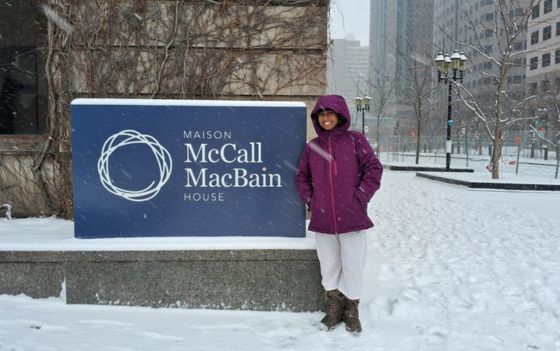
Kiran's story is pure inspiration! Growing up in Kolkata she juggled family and studies. “Having to raise three children wasn’t easy for my parents, but World Vision India supported my education and helped me discover my passion for social issues.” World Vision India’s Snehadeep community project and Play for Peace programme, conducted workshops on life skills, street plays, and puppet shows which became platforms for her to find her voice.