Youth Skill Development in India: Creating Opportunities and Ways to Donate to Underprivileged Children
India possesses one of the youngest populations in the world. A young workforce has the potential to drive economic growth, strengthen communities, and transform the future of millions of families. Yet for many young people, particularly those growing up in rural and economically vulnerable communities, that promise remains out of reach.
Millions of young men and women complete school or leave it early, only to discover that there is no clear pathway towards meaningful employment. They are eager to work, willing to learn, and determined to support their families. What they often lack is access to information, training, and employment networks.
The challenge is not a lack of potential. It is a lack of connection.
When Education Does Not Lead to Opportunity
Completing an education does not always guarantee employment. Young people from low-income households may face limited career guidance, financial difficulties, lack of practical skills, and distance from employment centres.
For families already struggling to meet their basic needs, further education or vocational training can also be difficult to afford. Supporting vulnerable families and helping young people develop practical skills can create benefits that extend across the household.
When young people become financially independent, families can become better positioned to support children's education and wellbeing.
Government Skill Development Programmes
Recognising this need, the Government of India launched the Pradhan Mantri Kaushal Vikas Yojana (PMKVY) in 2015. The programme was designed to provide free skill certification training across a wide range of sectors, including healthcare, hospitality, retail, information technology, construction, and manufacturing. With a substantial investment and nationwide reach, the scheme has trained millions of individuals and helped many secure formal employment.
However, reaching rural youth remains a persistent challenge.
For a young person living in a remote village, awareness of such opportunities is often extremely limited. Many are unfamiliar with available government programmes. Others face barriers such as distance from training centres, financial constraints, social expectations, or a lack of confidence. As a result, those who stand to benefit the most are frequently the least likely to access these opportunities.
Simply creating a training programme is not enough. Young people also need encouragement, guidance, information, and support to take the first step.
Connecting Young People With Skills and Jobs
Recognising this need, the Government of India launched the Pradhan Mantri Kaushal Vikas Yojana (PMKVY) in 2015. The programme provides skill certification training across sectors such as healthcare, hospitality, retail, information technology, construction, and manufacturing.
However, reaching rural youth remains a persistent challenge. Many young people are unaware of available programmes or face barriers such as distance, financial constraints, social expectations, or a lack of confidence.
This is where World Vision India plays a crucial role.
Across 112 programme locations, World Vision India identifies, motivates, and supports young people to enrol in National Skill Development Corporation (NSDC)-approved training centres. Teams work directly within communities to bridge the gap between potential and opportunity.
From Training to Sustainable Livelihoods
The results are encouraging.
In one initiative, 40 young people were trained as para-veterinary service providers. Since completing their training, they have provided essential services to more than 5,000 goat-rearing households, improving livestock health, increasing productivity, and creating sustainable livelihoods for farming families.
In Delhi, World Vision India partnered with the Good Worker organisation to conduct 15 Job Melas, connecting young job seekers with employers. More than 155 young people secured employment, with salaries ranging between ₹15,000 and ₹20,000 per month. For many families, this represented a turning point.
How Skills Training Benefits Families
The impact of employment extends far beyond the individual.
When a young person gains a skill and begins earning, younger siblings may be more likely to remain in school, while parents experience reduced financial pressure. Families can gain better food security and access to healthcare, while young people gain confidence and independence.
This is why efforts to help poor children and support children in need are closely connected to the economic wellbeing of their families. Stronger livelihoods can help households provide children with education, nutrition, healthcare, and a safer environment.
People who want to contribute can choose to donate to underprivileged children or support programmes that strengthen vulnerable communities.
Creating Opportunities for the Next Generation
Skills training is not merely about employment statistics. It is about restoring dignity, creating opportunity, and enabling young people to take ownership of their future.
A young person who receives training can become a skilled worker, support a family, encourage siblings to continue their education, and inspire others in the community. Over time, individual opportunities can contribute to stronger and more resilient communities.
Supporting families through livelihood opportunities can also help communities become more self-reliant in the long term. Individuals who wish to help poor children can explore donations, education initiatives, and livelihood programmes that create lasting opportunities.
A Future Where No Young Person Is Left Behind
Every young person deserves the chance to contribute their talents and build a life of purpose. Being born into a rural or economically vulnerable community should not determine whether someone gets access to skills, employment, or a secure future.
The young people who once felt forgotten can become drivers of change when they receive the right support. Skills training gives them more than a certificate. It can give them confidence, independence, income, and a clearer path forward.
With the right combination of skills, guidance, opportunity, and community support, the youth who were once left behind can help lead their families and communities towards a more secure and hopeful future.
Kiran's Inspiring Journey to Canada
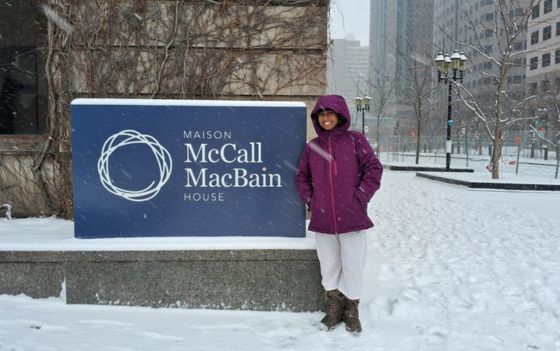
Kiran's story is pure inspiration! Growing up in Kolkata she juggled family and studies. “Having to raise three children wasn’t easy for my parents, but World Vision India supported my education and helped me discover my passion for social issues.” World Vision India’s Snehadeep community project and Play for Peace programme, conducted workshops on life skills, street plays, and puppet shows which became platforms for her to find her voice.