How Women’s Self-Help Groups Improve Child Education in India
When a mother grows in confidence, knowledge, and financial stability, a child’s future often changes with her. Across India, women’s self-help groups are quietly creating that kind of change. What begins as a small group of women saving together often becomes something much bigger — stronger families, better support for children, and a deeper commitment to education.
This is why women’s self-help groups matter so much in the conversation around child education in India. Their impact goes far beyond savings and small loans. By helping women become more informed, financially stable, and active in community life, these groups are creating better learning environments for children and encouraging families to see education as a long-term priority.
This community-led approach also aligns well with World Vision India’s current public messaging. The organisation describes its work as integrated development that supports education, health, child protection, and economic development together so that children, families, and communities can move towards lasting change.
What are women’s self-help groups?
Women’s self-help groups, often known as SHGs, are small community-based groups where women come together to save money, access small loans, build practical skills, and support one another. These groups are often rooted in trust, shared goals, and collective progress.
While SHGs are usually discussed in terms of women’s empowerment or livelihoods, their impact often reaches children directly. When women gain more control over finances and household decisions, children are more likely to benefit through improved nutrition, more stable home environments, and stronger educational support.
How self-help groups support child education in India
One of the most important ways self-help groups improve child education in India is by strengthening the family’s ability to invest in learning. For many low-income households, school-related costs such as uniforms, transport, books, and basic supplies can become a burden. Even when schooling is available, these costs can affect regular attendance.
When women are part of SHGs, they often gain access to small savings systems, credit, and income opportunities that improve household stability. This can make it easier for families to keep children in school and reduce the pressure to prioritise short-term survival over long-term education.
World Vision India’s current website messaging consistently links socio-economic empowerment with better outcomes for children and families, noting that its community-based work includes economic development, education, health, and leadership development.
Better support for learning at home
The impact of SHGs is not only financial. Women who participate in these groups often become more confident in family decision-making and more aware of the importance of education.
This can lead to meaningful changes at home. Mothers may begin monitoring attendance more closely, encouraging regular study habits, speaking with teachers, and making stronger efforts to keep children engaged in school. Even when a mother has limited formal education herself, her encouragement can make a major difference in how a child experiences learning.
A supportive home environment often becomes the first step towards better school performance.
How SHGs build education-focused communities
Self-help groups do not only influence individual households. They also help shape how entire communities think about education.
Because SHGs are built on regular interaction and shared learning, they often become spaces where women discuss common concerns, including school dropout, girls’ education, child well-being, and family challenges. Over time, this can create a community culture that values education more strongly.
This fits with World Vision India public emphasis on community-led action. The organisation says its programmes are shaped and driven by communities to strengthen ownership, accountability, and long-term sustainability.
Why women’s empowerment helps children stay in school
There is a strong connection between women’s empowerment and child education. When women have more confidence, better access to resources, and stronger voices in the household, children often receive more consistent support.
This is especially important in rural or underserved communities, where barriers to schooling may include poverty, gender bias, weak access to services, or low parental awareness. In these settings, a mother who is informed, connected, and financially more secure is often better placed to protect her child’s right to learn.
World Vision India’s public pages describe education as a key programme area that helps reduce school dropouts and improve learning environments, while also highlighting women’s empowerment and livelihoods as part of its broader community transformation work.
The role of partnerships in improving child education
SHGs can become even more effective when they are supported by development organisations that work closely with local communities. Training, education awareness sessions, learning support, and links to school systems can help turn community effort into long-term impact.
This kind of partnership model is visible in World Vision India’s current public materials. The organisation says it works with communities, government bodies, NGOs, and civil society groups to provide holistic support for vulnerable children and families.
That broader ecosystem matters because children do best when family support, community encouragement, and institutional systems all work together.
Why this matters for India’s future
Child education in India cannot improve through schools alone. It also depends on whether families are stable, parents are engaged, and communities are ready to support learning.
Women’s self-help groups help make that possible. They strengthen women, improve family resilience, and build local networks that can encourage children to stay in school and keep learning. What looks like a small shift in a mother’s life can become a turning point for a child’s future.
World Vision India’s site also frames this long-term change in similar terms, describing lasting progress as something that happens when vulnerable children and communities are empowered together through sustained, community-led transformation.
Conclusion
Women’s self-help groups are doing more than improving savings or livelihoods. They are helping shape stronger homes, more involved mothers, and more education-focused communities.
When women have the support to grow in confidence and capability, children often gain something just as important, a better chance to stay in school, learn well, and imagine a brighter future. In that sense, women’s self-help groups are not only empowering women. They are helping build the foundation of child education in India, one family and one community at a time.
Kiran's Inspiring Journey to Canada
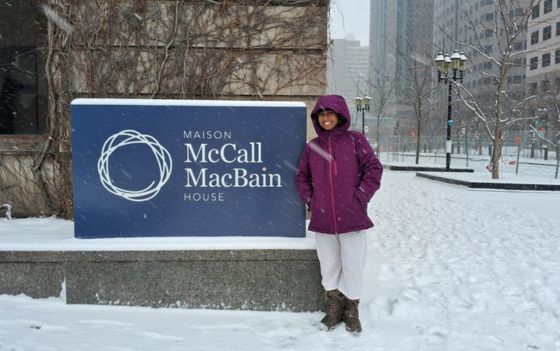
Kiran's story is pure inspiration! Growing up in Kolkata she juggled family and studies. “Having to raise three children wasn’t easy for my parents, but World Vision India supported my education and helped me discover my passion for social issues.” World Vision India’s Snehadeep community project and Play for Peace programme, conducted workshops on life skills, street plays, and puppet shows which became platforms for her to find her voice.